Small Home Office Ideas That Make Your Space Feel Bigger
Working with a small home office doesn’t mean sacrificing comfort, style, or productivity. I truly believe that even the tiniest workspace can feel intentional, inspiring, and functional when it’s designed with care. A small home office is less about square footage and more about smart choices—how you arrange furniture, what you store, how you light the space, and how you make it feel like yours.
I’ve found that when a home office works well, it quietly supports your focus instead of demanding attention. It should feel calm, organized, and welcoming—somewhere you actually want to sit down and get things done. Whether your office lives in a spare bedroom, a corner of your living room, or a tucked-away nook, these small home office ideas are meant to help you make the most of what you have.
Below, I’m sharing thoughtful, practical, and realistic ideas that work beautifully for small spaces, without overcomplicating things.
Start With a Clear Purpose
Before choosing furniture or décor, I always recommend defining what the space needs to do. A small home office works best when it has a clear role. Is it primarily for computer work? Writing? Crafting? Video calls? Paperwork?
When space is limited, trying to make the office do everything often leads to clutter and frustration. Instead, prioritizing the main function helps guide every decision—from desk size to storage needs. Once the purpose is clear, it becomes much easier to eliminate unnecessary items and focus on what truly belongs in the space.
Affiliate links may be used in this post, and if so, I will receive a commission at no extra cost. I’m also part of the Amazon Affiliate (Associate) program, where I earn a commission from sales made through my affiliate links. Read the full disclosure policy.
Choose the Right Desk for a Small Space
The desk is the anchor of any home office, and in a small room, the right desk makes all the difference.
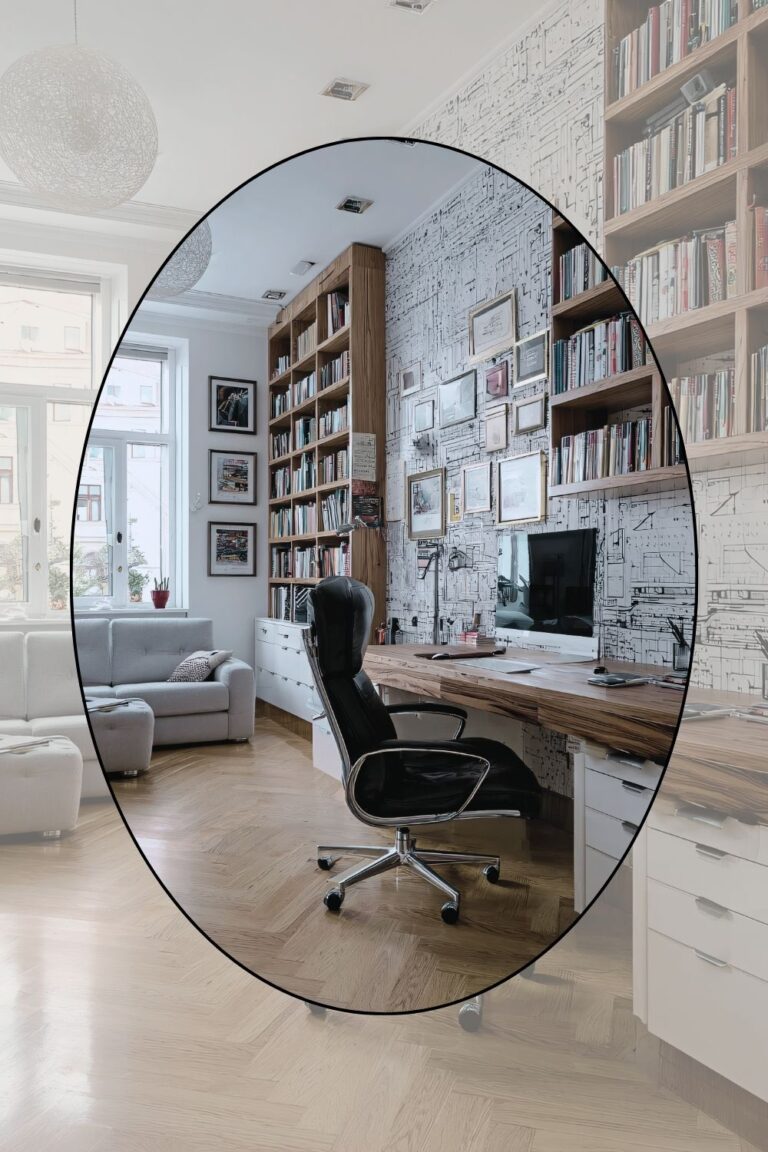
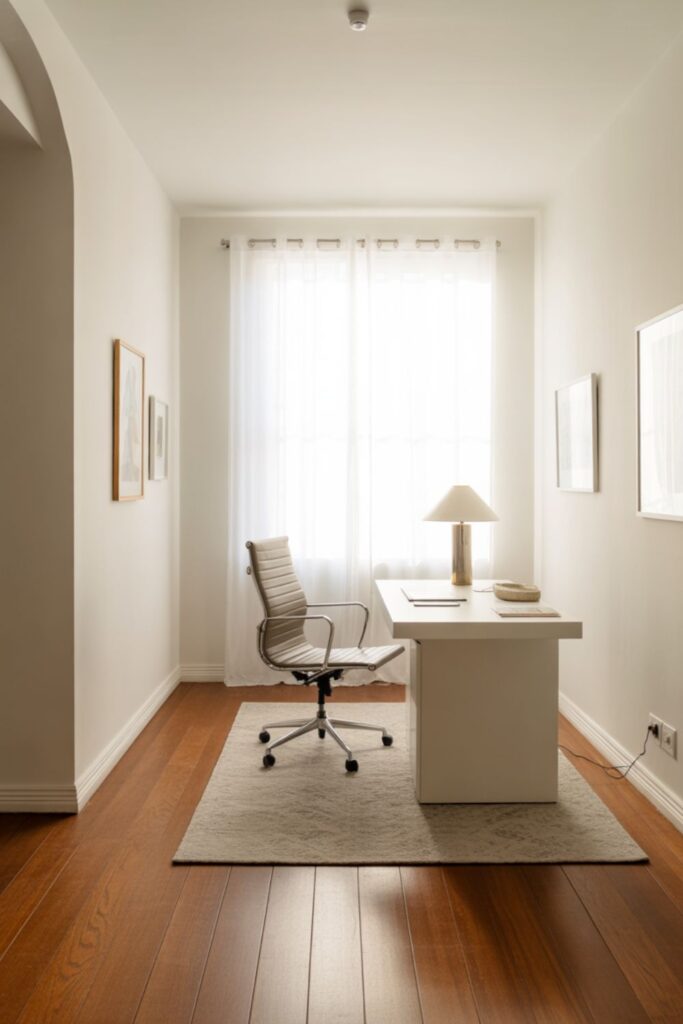
I like desks that feel visually light rather than bulky. Slim profiles, open legs, or wall-mounted designs keep the room from feeling crowded. A compact writing desk can often work just as well as a large executive desk, especially if most of your work happens on a laptop.
For very small spaces, these desk options tend to work well:
- Narrow desks with minimal depth
- Floating desks mounted to the wall
- Ladder desks with vertical shelving
- Corner desks that use overlooked space
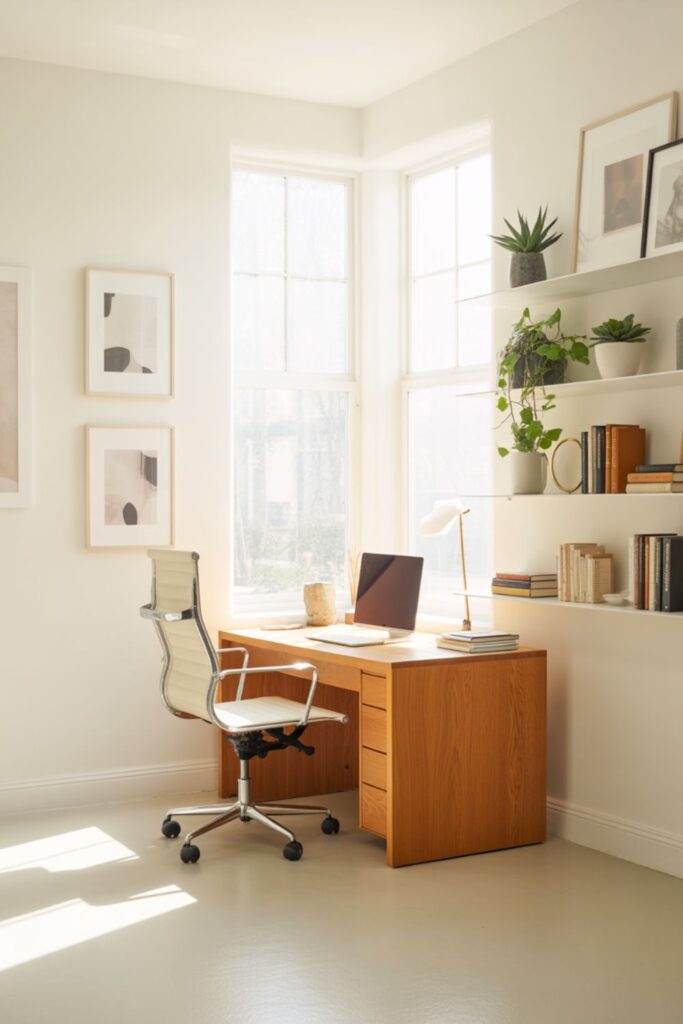
I also find that desks with built-in drawers help reduce the need for extra furniture, which keeps the overall footprint smaller.

Make Vertical Space Work Harder
One of the biggest mistakes I see in small home offices is ignoring vertical space. When floor space is limited, the walls become incredibly valuable.
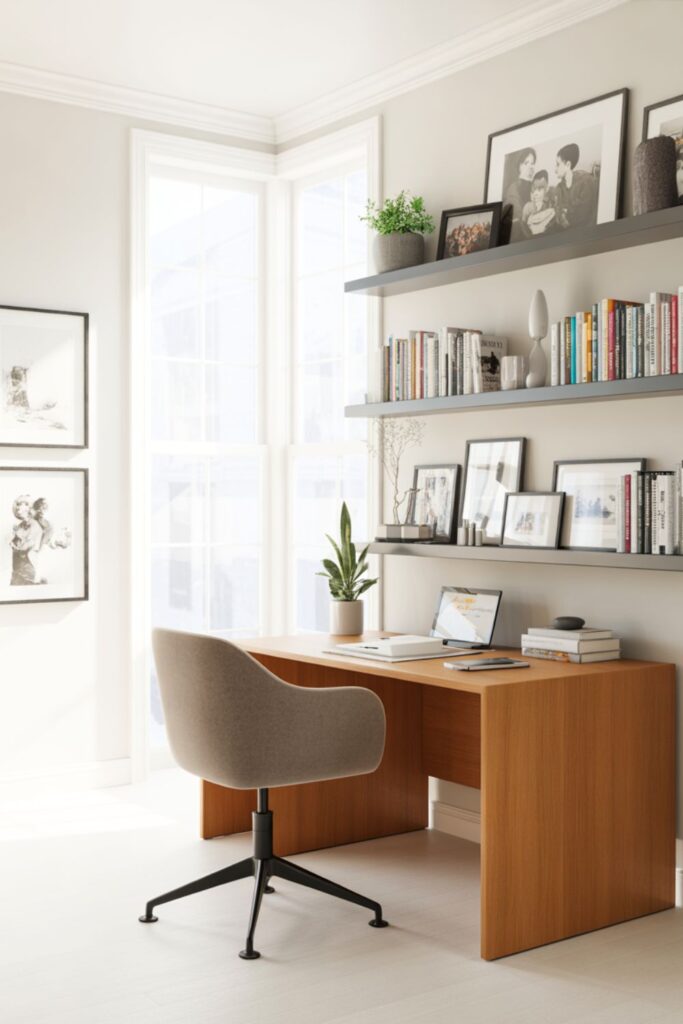
Wall-mounted shelves, pegboards, or slim cabinets allow you to store supplies without crowding the room. I prefer shelving that feels open rather than closed, as it keeps the space feeling lighter and more breathable.
Vertical storage ideas that work especially well include:
- Floating shelves above the desk
- Tall bookcases with a narrow footprint
- Wall-mounted file holders
- Pegboards for tools, cords, or accessories
Using height instead of width helps the office feel organized without feeling boxed in.
Let Lighting Do Some of the Heavy Lifting
Lighting can completely change how a small home office feels. Even a beautifully decorated space can feel uninviting if the lighting is harsh or dim.
Whenever possible, I prioritize natural light. Positioning the desk near a window—even if it’s slightly off to the side—helps the room feel more open and energizing. If natural light is limited, layered lighting becomes essential.
A good small home office usually includes:
- A soft overhead light
- A focused desk lamp for task lighting
- Optional ambient lighting, like a small table lamp or wall sconce
Warm, balanced lighting keeps the space from feeling sterile while still being functional.
Keep the Color Palette Light and Calm
Color plays a huge role in how a small space feels. I’ve noticed that lighter, softer color palettes help small home offices feel more open and less cramped.
That doesn’t mean everything has to be white. Soft neutrals, warm creams, light grays, muted greens, pale blues, or gentle blush tones all work beautifully. These colors reflect light and create a sense of airiness.
If you love darker colors, using them intentionally—such as on an accent wall or through accessories—can still work without overwhelming the room.
Use Furniture That Multitasks
In a small home office, every piece of furniture should earn its place. I’m a big fan of items that serve more than one purpose.
Some smart multitasking furniture ideas include:
- Storage ottomans that double as seating
- Filing cabinets that also act as side tables
- Desks with built-in shelving or drawers
- Benches with hidden storage underneath
Choosing furniture that does double duty helps reduce clutter and keeps the space feeling intentional rather than crowded.
Keep Cords and Tech Under Control
Nothing makes a small office feel chaotic faster than visible cords and tangled cables. I’ve found that even a few minutes spent organizing tech can dramatically improve how the space feels.
Cable management ideas that work well in small offices include:
- Cord clips are attached to the desk
- Cable boxes to hide power strips
- Velcro ties for excess length
- Wall-mounted power strips under desks
When cords are out of sight, the office instantly feels calmer and more polished.
Create a Defined Workspace, Even in Shared Rooms
Not everyone has the luxury of a dedicated home office room. Many small offices live in bedrooms, living rooms, or even hallways. In these cases, defining the workspace becomes especially important.
I like using visual boundaries to separate work from home life. This can be done with:
- Area rugs under the desk
- Room dividers or folding screens
- Bookshelves used as partial dividers
- Different wall colors or wallpaper behind the desk
Even subtle boundaries help the brain recognize when it’s time to work and when it’s time to rest.
Choose Storage That Matches Your Workflow
Storage should support how you actually work, not just look pretty. I always recommend being honest about what you use daily versus occasionally.
For everyday items, open or easily accessible storage works best. For items you rarely touch, closed storage keeps visual clutter to a minimum.
Helpful storage ideas for small offices include:
- Drawer organizers for supplies
- Magazine holders for files
- Baskets for loose items
- Slim filing cabinets tucked under desks
The goal isn’t to store everything—it’s to store the right things in a way that feels easy.
Keep Décor Simple but Meaningful
Decorating a small home office doesn’t require filling every surface. In fact, restraint often works better.
I prefer choosing a few meaningful decorative pieces rather than lots of small items. A piece of wall art, a framed quote, or a simple plant can make the space feel finished without cluttering it.
Decor ideas that work well in small offices include:
- One statement art piece
- A small plant or two
- A neutral rug
- A pinboard or inspiration board
These elements add personality while keeping the space calm and functional.
Don’t Underestimate the Power of a Good Chair
A comfortable chair is non-negotiable, even in a small space. I believe a chair should support your body and fit the scale of the room.
Slim-profile chairs or armless designs often work better in small offices. Adjustable chairs ensure comfort without needing extra cushions or accessories that take up space.
Choosing a chair in a neutral or light color can also help it visually blend into the room rather than dominate it.
Use Mirrors to Make the Space Feel Bigger
Mirrors are one of my favorite tricks for small rooms. A well-placed mirror can reflect light and create the illusion of more space.
In a small home office, a mirror can be:
- Hung opposite a window
- Placed above a desk
- Leaned against a wall in a corner
This simple addition can make the room feel brighter and more open with very little effort.
Add Soft Textures for Comfort
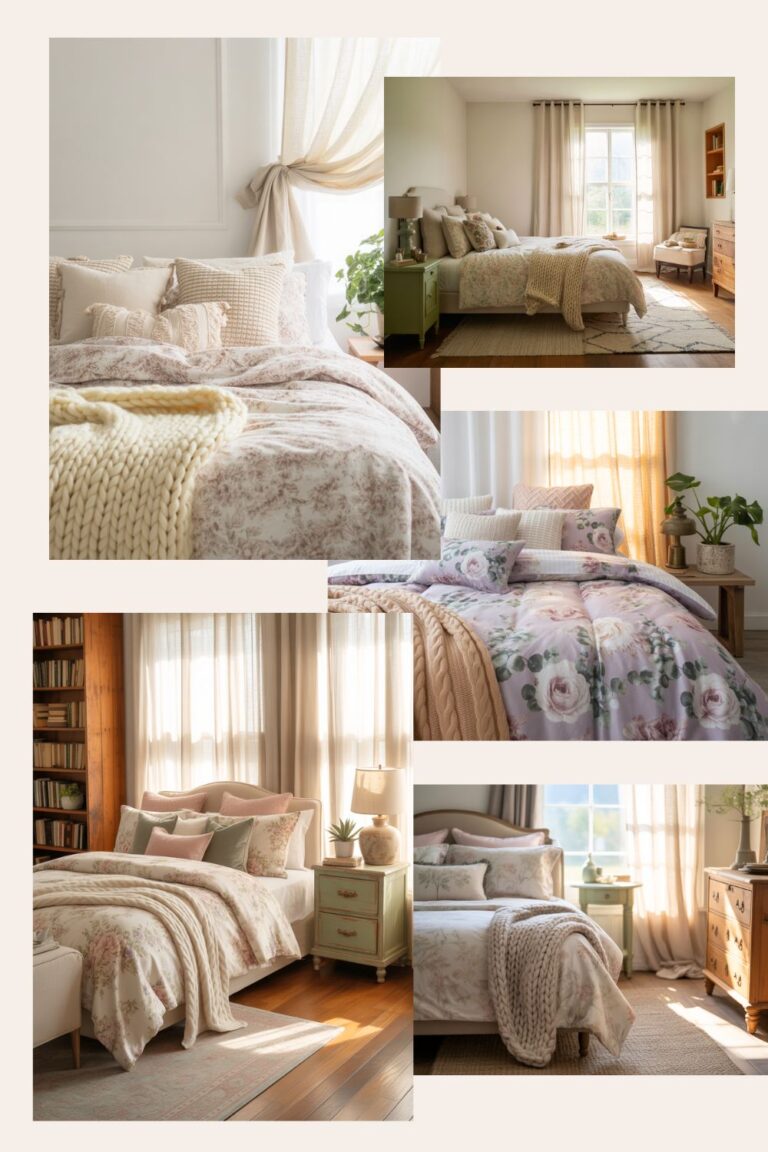
Small offices can sometimes feel overly utilitarian. I like balancing functionality with softness so the space feels inviting rather than sterile.
Soft textures might include:
- A cozy area rug
- Linen curtains
- A cushioned chair pad
- Fabric-covered storage bins
These touches add warmth without taking up much physical space.
Keep the Desktop Clear
A clear desk makes a noticeable difference in focus and productivity. I try to keep only the essentials on the desktop and store everything else out of sight.
Helpful habits include:
- Limiting desk décor to one or two items
- Using drawer organizers
- Doing a quick daily reset at the end of the workday
A clutter-free surface helps the whole room feel calmer.
Think About Acoustics in Small Spaces
Sound can be just as important as visuals, especially if the office is near busy areas of the home. Soft materials help absorb sound and reduce echo.
Acoustic-friendly additions include:
- Rugs
- Curtains
- Fabric wall hangings
- Upholstered furniture
These elements quietly improve the comfort of the space without being obvious.
Personalize Without Overcrowding
Even without personal stories or photos, a home office should still feel personal. I like subtle personalization—things that inspire rather than distract.
This might include:
- Favorite colors
- Inspiring words or phrases
- Objects that reflect your style
- Artwork that sets the mood
The key is choosing items intentionally rather than filling the space just to fill it.
Reevaluate and Edit Regularly
Small spaces benefit from regular editing. What worked six months ago might not work now, and that’s okay.
I recommend periodically asking:
- What do I actually use?
- What feels cluttered?
- What could be stored differently?
Small adjustments over time keep the office functional and enjoyable.
Embrace Simplicity
At the end of the day, a small home office doesn’t need to be perfect—it just needs to support your work and well-being. I truly believe that simplicity is the secret ingredient.
A thoughtful layout, intentional storage, calming colors, and good lighting go a long way. When everything has a purpose and nothing feels forced, even the smallest office can feel spacious, peaceful, and productive.
A well-designed small home office isn’t about squeezing more in—it’s about choosing better.