Modern Home Office Ideas: Create a Space That Feels Fresh, Functional, and Truly Yours
I’ve been working from home for about twenty years now, and one thing I’ve learned along the way is that your workspace shapes how you feel every single day. Over the years, I’ve worked from dining tables, tiny corners, makeshift desks, cozy nooks, and the occasional “office” carved out of nowhere. And because of that, I’ve become a little bit obsessed — in the best way — with home office design.
There’s something magical about helping people create a workspace that feels like a breath of fresh air. Even if the rest of the house feels chaotic or lived-in (mine often does), the right office design can ground you, energize you, and make your workday feel smoother.
And one style that continues to rise in popularity — for good reason — is modern home office design. It’s clean, calming, intentional, and adaptable. It works beautifully whether you have a dedicated room, a shared space, or a corner you’re trying to make feel purposeful.
So let’s talk about how to build a modern home office that’s not just pretty but genuinely functional for real-life work.
More to read:
- Cozy Home Office Ideas for the Work at Home Woman
- Small Home Office Ideas That Make Your Space Feel Bigger
- 20 Warm and Cozy Home Office Ideas for Everyday Work Life
- Small Home Office Ideas That Actually Work
Affiliate links may be used in this post, and if so, I will receive a commission at no extra cost. I’m also part of the Amazon Affiliate (Associate) program, where I earn a commission from sales made through my affiliate links. Read the full disclosure policy.
What Makes a Home Office “Modern”?
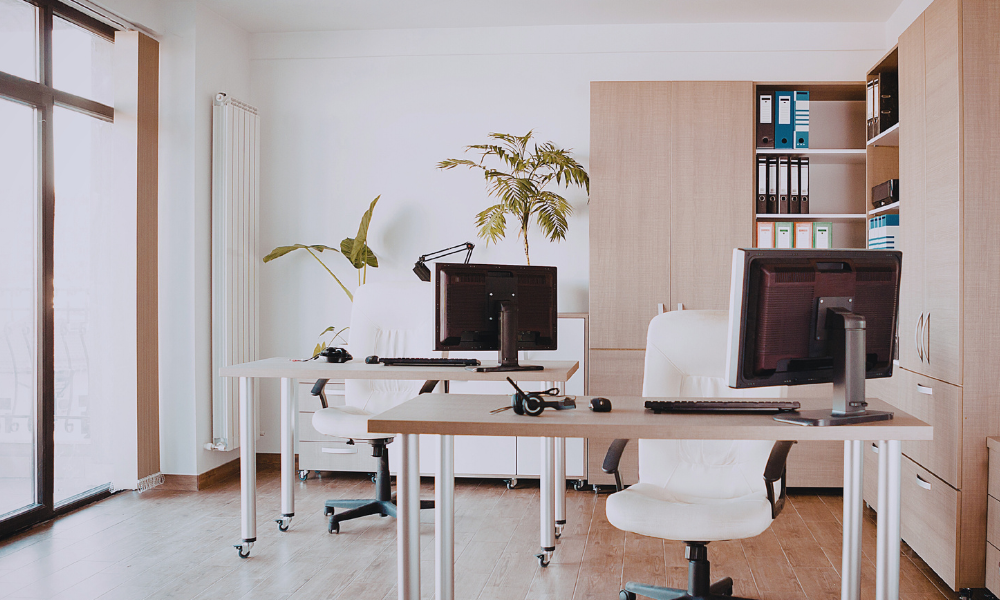
A modern home office usually focuses on clean lines, a sense of breathing room, and a very intentional approach to furniture and decor. Nothing feels crowded or overly decorative. Instead, the whole room feels grounded and balanced.
Modern design combines practicality with beauty, so every element serves a purpose while still looking cohesive. When you step into a modern workspace, you immediately feel like you can focus because the room isn’t demanding your attention—it’s supporting it.
Start With a Clean, Intentional Layout
Modern design begins with clarity. Before you even think about decor, you want to decide how the room will function. The best layouts allow your eyes and your body to move comfortably through the space.
Your desk should sit where the light works for you—near a window, beside it, or anywhere natural light flows in without creating glare. Modern spaces also benefit from a sense of open pathways and soft boundaries.
Even if your workspace is part of a larger room, you can still create distinct zones by how you arrange your furniture. A main work zone for your desk, a small area for storage, and maybe a quiet corner to sit and think can completely transform how the space feels.
Choose a Desk With Clean Lines and Practical Storage
The desk you choose will set the tone for your whole office. In modern design, the best desks feel streamlined and purposeful.
They aren’t oversized and they don’t demand too much visual weight. Instead, they support the work you need to do without becoming the entire story of the room.
A simple writing desk, a floating wall-mounted desk, or a clean-lined wood and metal desk fits beautifully into this style. Storage matters too, but in a modern home office, you don’t need a huge bank of drawers.
Just enough to tuck away what you need is perfect, because too much storage can slowly turn into too much clutter.
Invest in a Comfortable, Stylish Office Chair
After two decades of working from home, I can say one thing with absolute certainty: your office chair matters. You spend more hours in it than almost any other seat in your home. And in a modern home office, your chair can be both supportive and attractive.
You might choose an upholstered chair, a sleek ergonomic design, a faux leather piece, or even a sculptural modern chair that feels like a design moment in itself. The important thing is that it fits your body and your office without feeling bulky or outdated.
Keep Your Color Palette Soft, Calm, and Cohesive
Color makes a huge difference in how focused and relaxed you feel. In modern home office design, softer color palettes tend to work best. Whites, creams, warm beiges, muted grays, and gentle blues make the room feel open and airy.
Darker contrasts like black or charcoal can add a grounded, structured look as long as they’re used in the right places. The beauty of modern design is that you can keep things simple without ever feeling plain.
And if you love a bold moment, a single piece of art or one accent wall can bring in a modern punch of personality without overwhelming the room.
Make Lighting a Priority
Lighting is one of the quiet superpowers of modern design. A good workspace needs layers of light, especially if you work throughout the day.
A main overhead light gives the room clarity, a desk lamp or adjustable task light helps your eyes in the evening, and softer lighting—like a small table lamp or floor lamp—creates a warm, comforting atmosphere.
Modern lighting tends to lean toward streamlined shapes and warm, diffused glow rather than heavy shades or ornate fixtures. When the lighting feels balanced, the whole room feels more grounded.
Use Sleek, Practical Storage
Modern design doesn’t mean everything must be hidden, but clutter definitely doesn’t belong. Storage should feel intentional and integrated into the room.
Floating shelves, narrow bookcases, wall-mounted cabinets, or simple closed storage help keep your space from feeling heavy.
Even a rolling drawer unit tucked under your desk can make a huge difference in how organized you stay.
After working from home for so many years, I’ve learned that the more you assign things to their own place, the more peaceful your workspace feels.
Blend Your Technology Into the Design
Technology is a huge part of modern life, but it doesn’t have to dominate your home office. In a modern design, tech blends in rather than fights for attention. Using wireless keyboards and mice, routing cords behind desks or into cable boxes, adding monitor arms, and choosing slim, unobtrusive lighting helps your space feel clean and intentional. The less visual clutter your tech creates, the more “modern” your office will look.
Use Texture to Add Warmth
Even the cleanest modern offices need warmth, and texture is where that magic happens. A cozy rug under your desk softens the lines of the room. Linen curtains filter the light and create movement.
A textured lamp shade, a ceramics vase, or a woven basket adds dimension without clutter. Modern design loves contrast in subtle ways—smooth next to soft, structured next to organic. When you layer these textures thoughtfully, the whole room feels more balanced.
Add Plants for Freshness and Life
Plants are one of the easiest ways to bring a modern home office to life. They soften straight edges, purify the air, and make the whole room feel more inviting.
Even one plant—like a tall snake plant or a small pothos trailing off a shelf—can change the energy of the space.
Greenery works beautifully with modern materials because it adds a natural, organic contrast to metal and clean lines.
Bring in Art That Inspires Your Work
After twenty years of working from home, I’ve learned that what hangs on your walls really does influence your mindset. A modern home office doesn’t need a gallery wall, but it does benefit from intentional artwork.
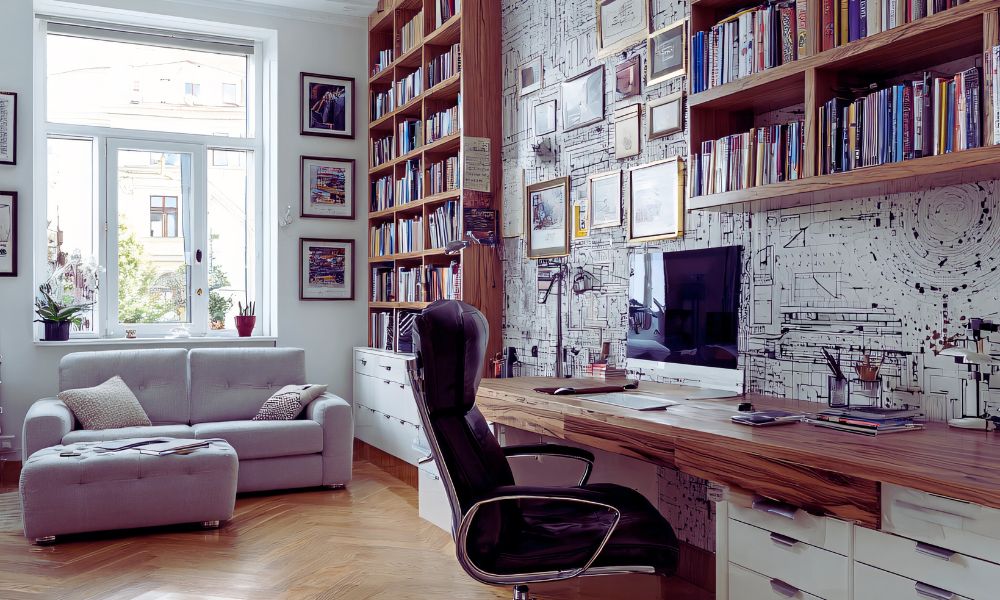
Abstract pieces, simple line drawings, oversized prints, and calm black-and-white photography all work beautifully here. The goal is to choose art that inspires you without distracting you. A single large piece can be more effective than a collection of many small ones.
Use Open Shelving Thoughtfully
Open shelving is a perfect fit for modern home offices as long as you don’t overload it. Instead of filling every inch, think of your shelves as a curated display. A few books, a plant, maybe one sculptural object, and a framed photo or two are all you really need. When your shelves feel balanced, the room feels calmer and more open.
Keep Your Desk Surface Clear
A modern desk looks best when it has room to breathe. Keeping your desktop open helps your mind feel clearer too. The essentials—a laptop or monitor, a lamp, a notepad, and a pen—can stay on top, but everything else should have a place to go at the end of the day. Working from home already blends your worlds, so a clean desk helps create a mental separation.
Choose Modern Window Treatments
Window treatments often get overlooked, but they dramatically affect the feel of a workspace. Sheer curtains, linen shades, or clean roller blinds fit beautifully into modern design. They allow light to enter softly without overwhelming the room. Heavy drapes tend to work against the modern aesthetic, so lighter options usually feel better.
Create a Secondary Seating Area if You Can
Even a tiny corner can become a retreat within your workspace. A comfortable accent chair with a small side table can become the perfect spot for brainstorming, reading, or simply taking a mental break. It also adds a relaxed, modern moment that balances out the more structured desk area. If you’ve ever needed a posture change midday, this little nook becomes priceless.
Mix Materials for a Modern Feel
Modern design thrives on contrast. Wood paired with metal, glass mixed with fabric, stone paired with soft textiles—these combinations keep the room interesting without making it visually busy. When everything in a room is the same material, it starts to feel flat. Mixing materials gives your space depth and character while still staying true to the modern style.
Add Personal Touches Without Overcrowding Your Space
A modern office should still feel like your office. Personal touches matter, even in a clean and minimal style. A favorite photo, a framed quote, a beautiful notebook, or a small plant can warm up the room instantly.
The key is to choose a few meaningful pieces rather than crowding the room with too many items. After so long working from home, I’ve learned that personal details make a space feel comforting, but you only need a handful to achieve that feeling.
Make a Modern Office Work in Small Spaces
One of the best things about modern design is how adaptable it is. You don’t need an entire room to create a modern home office.
Some of the most beautiful spaces are small and tucked into unexpected corners—a bedroom nook, a closet turned office, a landing, or even one end of a dining table.
Modern style thrives in small areas because it emphasizes clean lines, limited clutter, and smart storage.
Use Vertical Space to Your Advantage
If your workspace is small, your walls can do a lot of the heavy lifting.
Floating shelves, mounted storage, rail systems, or a vertical pinboard can help you stay organized without sacrificing surface space.
Lighting that attaches to the wall can also free up your desktop. When you start thinking vertically, modern design really starts to shine.
Give the Room One Strong, Modern Focal Point
Modern design loves a good statement moment. It doesn’t have to be expensive or dramatic—it just needs intention.
Maybe it’s a bold piece of art, a painted accent wall, a striking rug, or a sculptural chair.
One strong focal point can elevate the entire room and make even a small home office look thoughtfully designed.
Keep the Space Flexible as Your Needs Change
One thing I’ve learned from working at home for so many years is that your needs shift. Your schedule changes, your tasks change, your equipment changes, and sometimes your space needs to adapt.
A modern home office should have enough flexibility to grow with you. Lightweight furniture, adjustable lighting, rolling storage, and modular pieces help your office evolve as your life evolves.
Final Thoughts: Make Modern Design Fit Your Real Life
Creating a modern home office doesn’t require a huge budget or a picture-perfect room. It simply requires intention. Modern design gives you the freedom to build a space that feels peaceful, uncluttered, and supportive of the way you work. After twenty years of working from home, I can tell you that a well-designed workspace doesn’t just help you stay organized—it truly changes the way the workday feels.
Whether you’re working from a full room, half a room, a shared area, or a little corner, you can bring modern style into your setup. You can choose clean lines, soft colors, layered light, natural textures, and simple design moments that make your space feel fresh and calming. A modern home office doesn’t have to be elaborate or perfect. It just has to be intentional, supportive, and designed for the real life you’re living.