Small Home Office Ideas That Actually Work
Creating a home office in a small space can feel overwhelming. When square footage is tight, every decision suddenly feels heavier—where will the desk go, how do I store things, and how do I make this feel like a place I want to work instead of a corner I tolerate?
I believe a small home office can be just as inspiring, functional, and beautiful as a large one. In fact, sometimes it’s even better. Small spaces force intention. They ask you to be thoughtful about what you keep, how you move, and what you really need around you to do your work well.
A small office isn’t about squeezing a desk into a corner and calling it done. It’s about designing a space that supports your focus, your creativity, and your daily rhythms—without taking over your home.
These ideas are about working with your space instead of fighting it.
Affiliate links may be used in this post, and if so, I will receive a commission at no extra cost. I’m also part of the Amazon Affiliate (Associate) program, where I earn a commission from sales made through my affiliate links. Read the full disclosure policy.
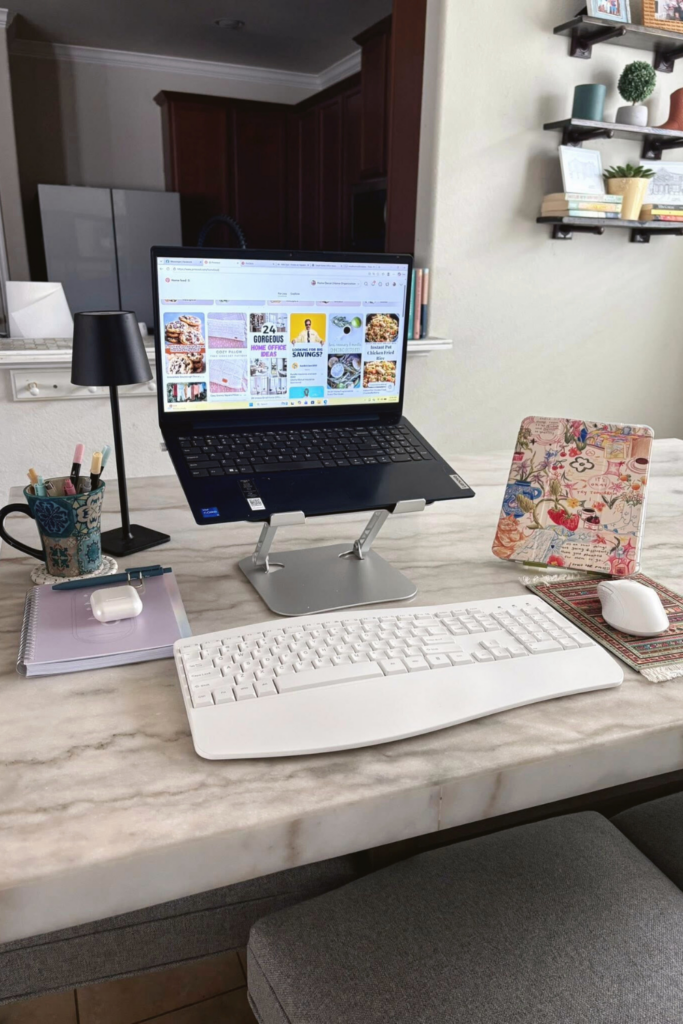
My current small office set up
I don’t even have a room I can call “my office.” My workspace lives right here at our dining room table. It’s a shared surface, a shared room, and a shared rhythm of life—and for a long time, that made me feel like I was doing something wrong. Like a “real” home office was supposed to have four walls and a door. But over time, I realized that what matters isn’t where I work—it’s how the space supports me while I’m there.
So I stopped waiting for the perfect setup and started making this one feel good.
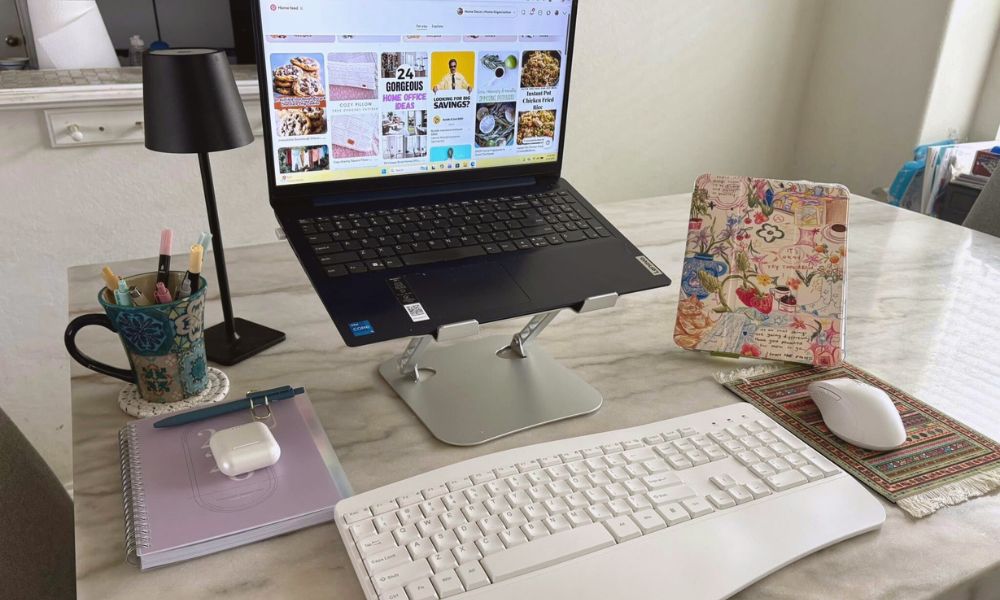
I gave myself a sense of intention within the space. I elevated my laptop so it feels more like a workstation than a temporary perch. I added a small lamp so I’m not relying on harsh overhead light. I chose tools I enjoy touching—a comfortable keyboard, a smooth mouse, a pen cup that makes me smile. Even the tiny rug under my mouse adds warmth and personality. Everything I use has a home, and when I’m done, it can all be gathered and cleared away.
This little arrangement turns a shared table into my workspace for a few hours a day. It tells my brain, “This is where we focus.” It feels calm. It feels cared for. And it reminds me that a home office doesn’t have to be permanent or private to be powerful—it just has to work for the life I’m actually living.
Start With How You Actually Work
Before choosing furniture or décor, it helps to get honest about how you work.
Do you use a laptop or a desktop?
Do you write, design, craft, plan, or meet with clients?
Do you need room to spread things out—or do you mostly work digitally?
A small home office works best when it’s shaped around real habits, not an idealized version of productivity. If you mostly use a laptop, a compact desk or wall-mounted surface may be perfect. If you keep paper planners, notebooks, or supplies nearby, built-in storage becomes more important than surface space.
Clarity here saves you from buying things that look good but don’t actually serve you.
Think Vertically, Not Just Horizontally
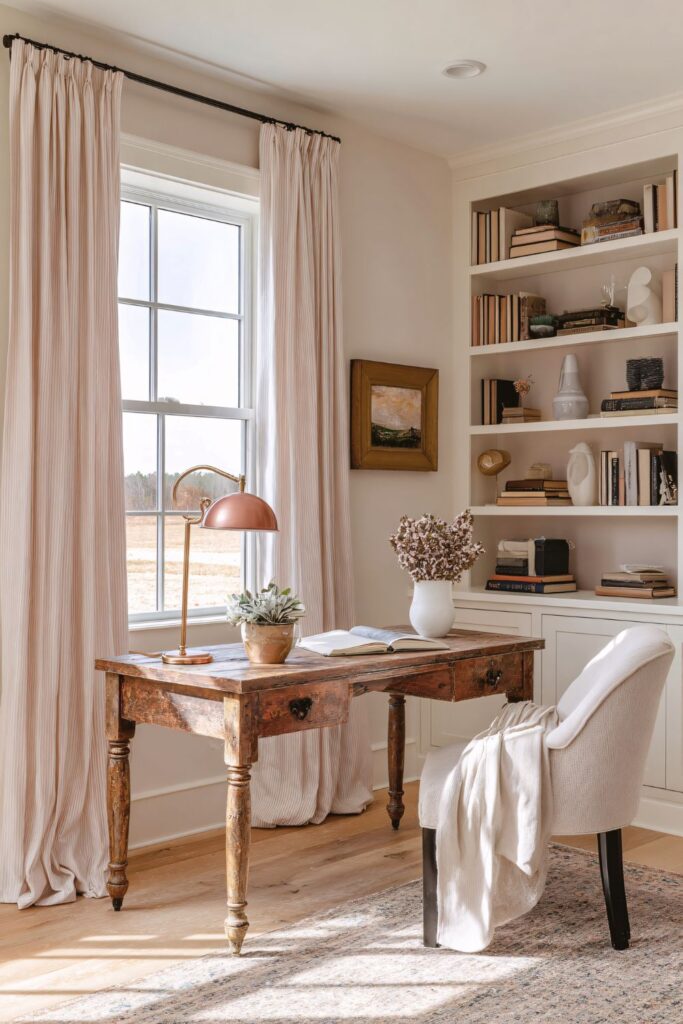
When floor space is limited, vertical space becomes your best friend.
Walls can hold shelves, pegboards, cork boards, floating cabinets, and even fold-down desks. This allows you to store what you need without cluttering the surface where you work.
A few well-placed shelves above a desk can replace a bulky filing cabinet. Hooks can hold headphones, bags, or baskets. A narrow bookcase can slide into spaces that feel “too small” for anything else.
Small offices thrive when the walls are allowed to participate.
Choose Furniture That Earns Its Keep
In a small office, every piece should work hard.
Look for:
- Desks with drawers or shelves
- Chairs that tuck in fully
- Storage ottomans
- Rolling carts that can move between rooms
- Benches that double as file storage
Furniture that does more than one job keeps the room from feeling crowded. A compact desk with built-in storage may eliminate the need for an extra cabinet. A rolling cart can hold supplies and slide under the desk when not in use.
The goal is not minimalism for its own sake—it’s efficiency that feels calm.
Use Light to Expand the Space
Light changes everything in a small room.
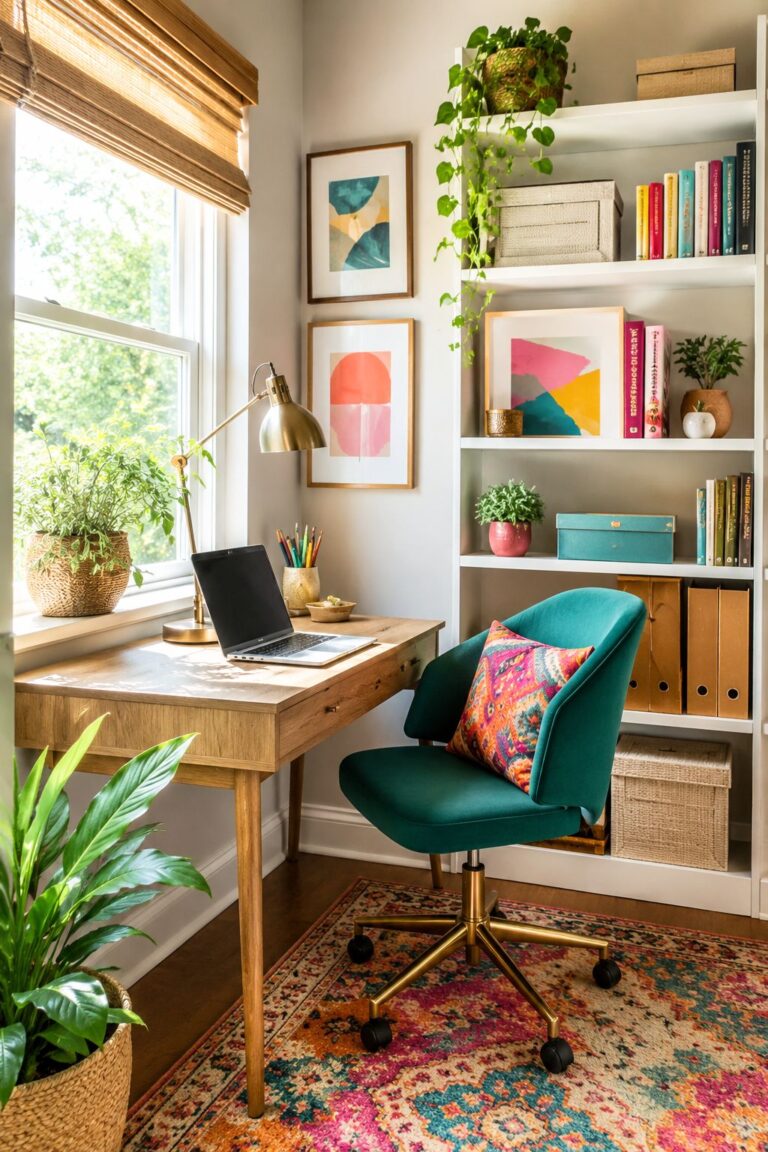
If you have a window, position your desk to take advantage of it. Natural light makes a small space feel open and energizing. It also reduces eye strain and improves focus.
If your office lacks natural light, layer artificial lighting:
- An overhead light for general brightness
- A desk lamp for focused work
- A soft lamp or wall sconce for warmth
This prevents the space from feeling flat or harsh. Good lighting makes even the smallest office feel intentional and inviting.
Keep the Color Palette Soft and Cohesive
Busy color schemes can overwhelm small spaces quickly.
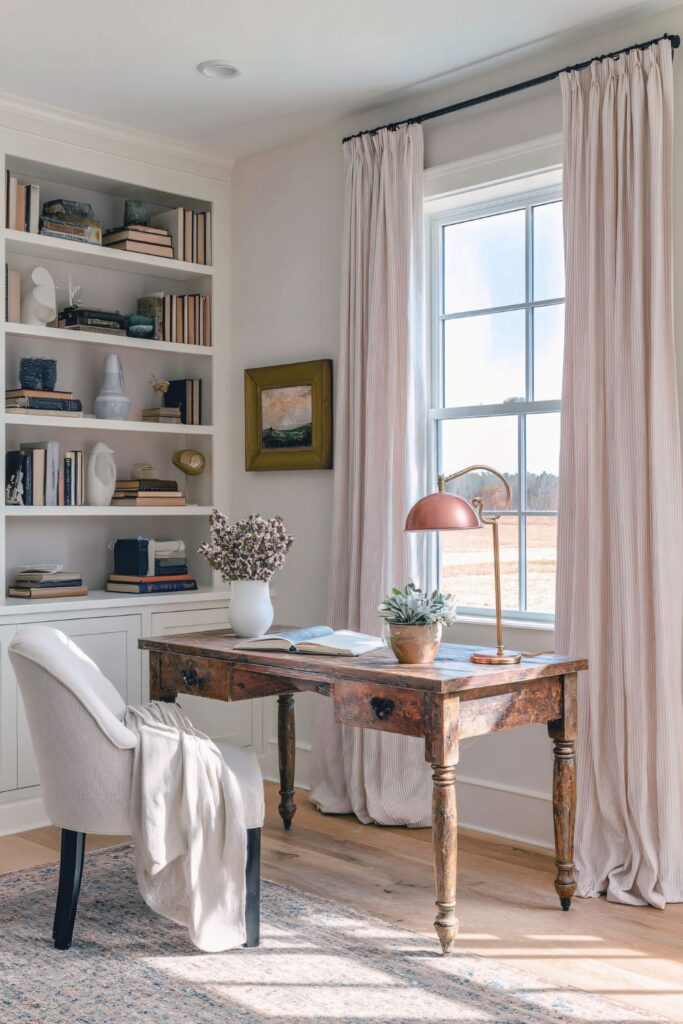
Light, neutral, or muted tones make a room feel open and breathable. That doesn’t mean everything has to be white—soft greens, warm creams, pale blues, and gentle grays all work beautifully in small offices.
A cohesive palette keeps visual noise low. When everything feels like it belongs together, the room feels larger and calmer.
You can still add personality through texture:
- Woven baskets
- Linen curtains
- Wooden accents
- Ceramic desk accessories
Texture adds warmth without visual clutter.
Create Zones, Even in Tiny Spaces
Even the smallest office benefits from clear zones.
Your desk is the work zone.
A shelf or cart becomes the supply zone.
A chair or corner becomes the thinking zone.
These boundaries help your brain settle. They give your space a sense of order and purpose.
A small rug under the desk can define the workspace. A shelf above can signal “this is where tools live.” Even visual cues help separate work from the rest of your home.
This is especially helpful if your office is part of another room—like a bedroom or living area. Zones allow the office to exist without overtaking the space.
Turn Closets and Nooks Into Hidden Offices
Some of the best small home offices live in unexpected places.
A closet, hallway nook, or under-stair alcove can become a beautiful, fully functional workspace with a few thoughtful choices. These spots are often overlooked, but they’re ideal because they’re naturally contained. You don’t have to fight the rest of the room for identity—your office simply is its own zone.
In a closet office:
- Remove the doors or replace them with curtains
- Install a simple desk surface or floating shelf
- Add shelves above for storage
- Use a plug-in sconce or small lamp for warmth
When you’re done working, you can close it off visually, which is powerful for mental boundaries—especially if you work from home full-time.
Nooks work similarly. A small wall between windows, a corner in a bedroom, or an unused landing can hold a compact desk and become a purposeful little hub.
Small offices don’t need rooms. They need intention.
Floating and Fold-Down Desks Are Game-Changers
Traditional desks aren’t always the best fit for tight spaces.
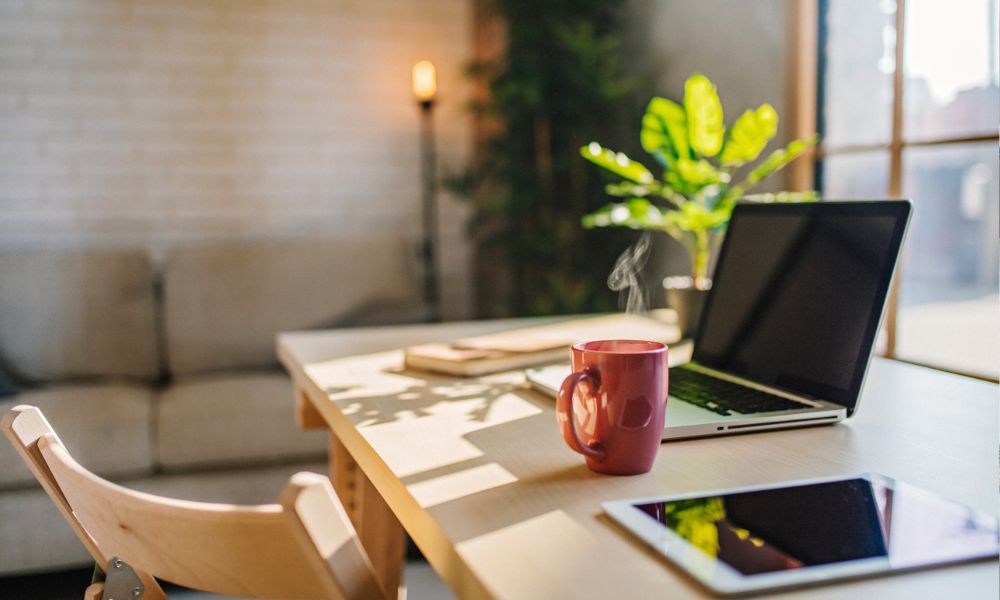
Wall-mounted desks, floating shelves turned work surfaces, and fold-down desks are incredible solutions when every inch matters. They give you a place to work without claiming permanent floor space.
A floating desk paired with a slim chair keeps the room visually light. A fold-down desk can disappear entirely when not in use—perfect for shared rooms or multipurpose spaces.
These options are especially helpful in:
- Bedrooms
- Guest rooms
- Living rooms
- Hallways
- Studio apartments
They allow your home office to exist without dominating the room.
Storage That Feels Light, Not Bulky
Storage is often what makes a small office feel cramped.
Instead of large cabinets, opt for:
- Floating shelves
- Slim bookcases
- Wall-mounted file holders
- Baskets on shelves
- Drawer units that slide under desks
The goal is to keep storage visually open. Closed cabinets can feel heavy in tight spaces, while open shelving feels airy—especially when styled simply.
Group similar items together so the shelves feel organized rather than cluttered. Leave some negative space. Not every inch needs to be filled.
A small office doesn’t need a lot of storage—it needs smart storage.
Make It Cozy Without Making It Crowded
A small office should still feel like a place you want to sit.
Cozy doesn’t have to mean cluttered. It can be created through:
- A soft rug underfoot
- A comfortable chair or cushion
- Warm lighting
- One or two meaningful pieces of art
- A small plant
These elements humanize the space. They make it feel like yours instead of a temporary setup.
What matters is restraint. Choose a few pieces that truly matter and let them shine. When everything is special, nothing feels overwhelming.
A cozy office is one that feels calm, warm, and welcoming—not packed.
Let the Office Match the Rest of Your Home
Small spaces feel better when they belong to the home instead of fighting it.
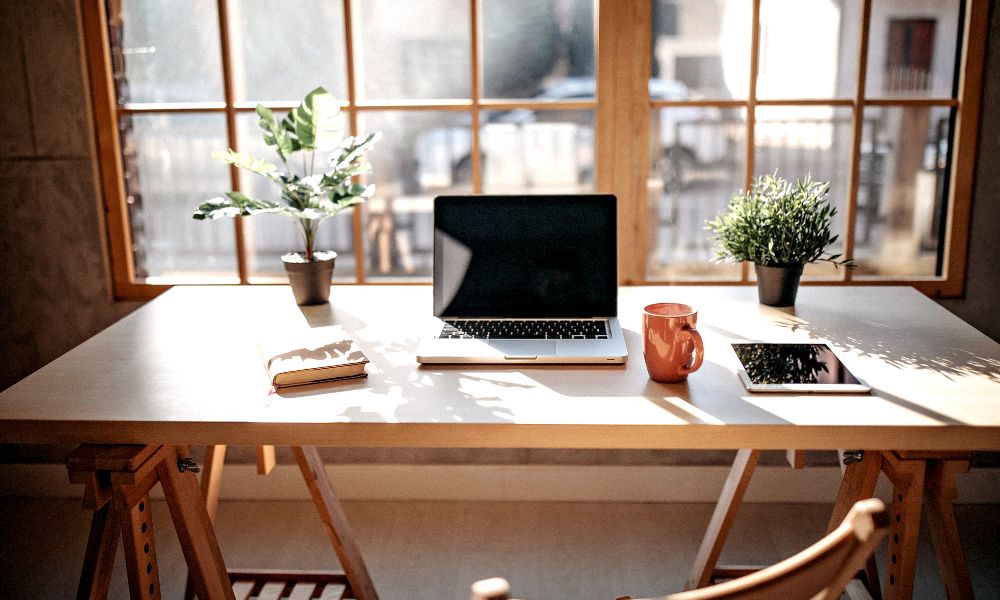
Use materials, colors, and textures that already exist in your house. If your home is soft and neutral, let your office echo that. If your style is cottage, modern, vintage, or minimalist—carry that language into your workspace.
This creates visual flow and keeps the office from feeling like an afterthought.
A small home office doesn’t need to announce itself loudly. It can quietly belong.
Keep the Surface Clear
Clutter feels heavier in small spaces.
Try to keep your desk mostly clear, with only what you use daily:
- Your computer
- A lamp
- A notebook
- One pen cup or tray
Everything else should have a home off the surface.
This doesn’t mean your desk must be bare—it means it should feel breathable. A clear surface makes a small space feel twice as big.
When your desk is calm, your mind often follows.
Use Visual Height to Create Airiness
Vertical elements make a small office feel taller.
Try:
- Tall shelving units
- Vertical art
- Wall-mounted organizers
- Curtains hung higher than the window
These draw the eye upward and create a sense of openness.
Even in the smallest rooms, height gives breathing room.
Allow It to Evolve
Your small office doesn’t need to be perfect on day one.
It can grow with you. Let it be a living space that adapts as your work changes. Start simple. Notice what feels awkward. Adjust.
A home office is not just furniture—it’s a relationship with your work.
The more your space supports you, the easier it becomes to show up consistently.
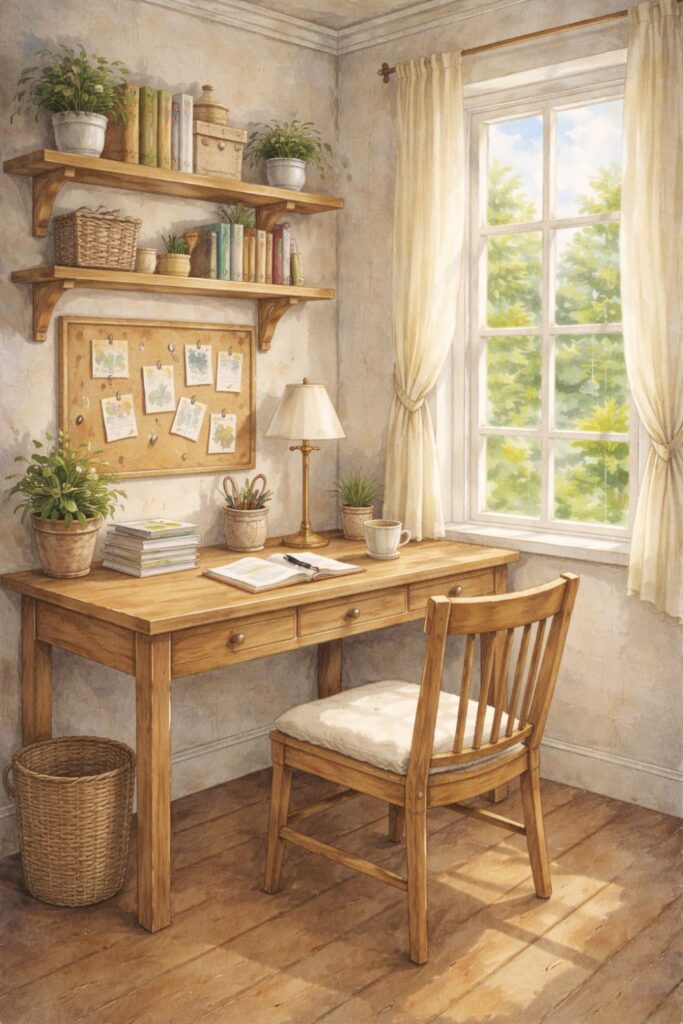
A Small Space Can Still Hold Big Purpose
A small home office isn’t a compromise.
It’s an opportunity to create something intentional, gentle, and supportive inside the life you already live.
It doesn’t need to be grand to be meaningful. It doesn’t need to be large to be powerful.
It just needs to feel like a place that welcomes you in, holds your focus, and reminds you that what you do matters.
Even the smallest corner can become a space where ideas grow.